When your vehicle has been involved in a collision, you want it repaired carefully and efficiently.
You expect the paint to match, the body panels to fit correctly, and the finished repairs to look great.
But another important part of the repair involves technology you may never see.
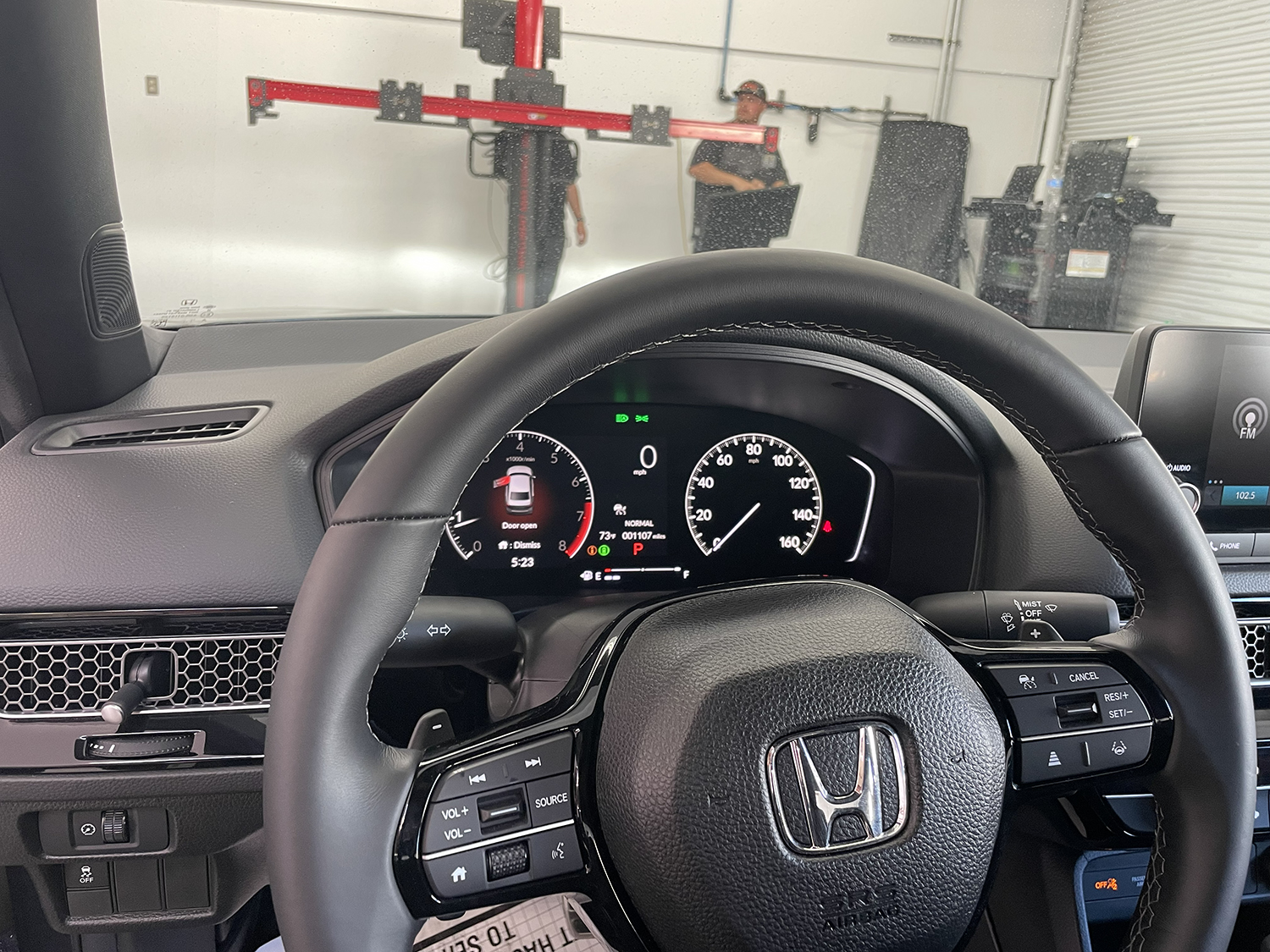
Cameras, radar sensors, and electronic control modules support many of today’s driver assistance features. When collision damage or repairs affect those components, manufacturer procedures determine whether calibration is required—and how it must be performed.
At CARSTAR Robert’s Collision, we address these needs through our partnership with Monterey Coastal Scanning, a separate ADAS calibration business that rents space on our one-acre lot in Monterey, California.
Our team handles the collision repairs. Monterey Coastal Scanning provides applicable ADAS calibration using specialized technology and manufacturer-guided procedures.
Together, we coordinate the work that matters beyond your vehicle’s appearance.
What Does OEM Mean?
OEM stands for Original Equipment Manufacturer. In this context, it refers to your vehicle’s manufacturer.
Manufacturers establish repair and calibration requirements for their vehicles, including specifications for:
- Camera and radar sensor mounting
- Component alignment and reference points
- Vehicle preparation
- Calibration targets and equipment
- Diagnostic routines
- Completion checks and verification
These requirements can vary by model year, vehicle configuration, and the system being serviced.
Following the applicable OEM procedures helps guide the work toward the specifications established for your vehicle.
Why Every Vehicle Has Its Own Requirements
There is no universal ADAS calibration procedure.
Different vehicles may require different targets, tools, measurements, software functions, and workspace conditions. Even models from the same manufacturer can have different instructions.
A forward-facing camera may require one procedure, while a radar sensor or a surround-view camera system on the same vehicle may require another.
Some calibrations take place while the vehicle is stationary. Others require driving under specified conditions. Certain vehicles require both.
The starting point is the correct manufacturer information for the specific vehicle and system—not an assumption based on its brand alone.
Modern Driver Assistance Features Depend on Accurate Information
Depending on your vehicle’s equipment, ADAS may support features such as:
- Blind spot monitoring
- Lane departure warning and lane keep assist
- Adaptive cruise control
- Automatic emergency braking
- Forward collision warning
- Surround-view cameras
- Parking assistance
These features rely on information gathered by cameras and sensors.
A collision can affect a component’s position or the structure supporting it. Removing, replacing, or reinstalling certain parts during repairs can also trigger a calibration requirement.
Manufacturer-guided calibration establishes the required alignment or reference points for applicable systems.
That is why a vehicle can look repaired while still needing attention to the technology behind a bumper, windshield, mirror, or grille.
The Correct Tools and Software Matter
Calibration requires tools and software capable of performing the specified procedure.
Depending on the vehicle, that may involve OEM diagnostic software or compatible equipment that supports the required calibration functions.
The important question is whether the tools, setup, and process meet the manufacturer’s requirements for the work being performed.
Having a scan tool does not automatically mean every calibration can be completed. Likewise, clearing a trouble code does not replace a required calibration.
The equipment must fit the procedure, and the procedure must fit the vehicle.
Precision Begins Before Calibration
Accurate calibration depends on proper preparation.
Depending on the manufacturer’s instructions, technicians may need to confirm:
- Relevant repairs have been completed
- Cameras, sensors, and brackets are correctly installed
- Tire pressure and vehicle loading meet requirements
- Ride height or wheel alignment is within specification
- Relevant faults have been addressed
- Workspace conditions and target placement are correct
For a stationary calibration, specified measurements guide the placement of targets or reflectors. For a driving calibration, prescribed road and operating conditions must be met.
These steps establish the conditions needed to perform the procedure correctly.
Verification Is Part of the Process
Once a calibration routine is completed, the manufacturer’s instructions guide any additional checks.
Depending on the system, these may include reviewing calibration status, checking relevant trouble codes, or performing a specified operational check or road test.
Results and related information can be documented in the repair file where available.
A successful calibration result confirms completion of that procedure. It does not guarantee that every driver assistance feature will perform without limitations in every situation.
Weather, visibility, road conditions, and obstructed sensors can still affect operation. Drivers must remain attentive and responsible for the vehicle.
Our Partnership with Monterey Coastal Scanning
Monterey Coastal Scanning is a separate business located on CARSTAR Robert’s Collision’s one-acre lot in Monterey.
This on-site partnership brings specialized ADAS calibration services to the same location as our collision repair work.
CARSTAR Robert’s Collision repairs the body, structural, and cosmetic damage. Monterey Coastal Scanning provides applicable calibration services to help restore calibrated systems to factory specifications.
For vehicles being repaired at our shop, this arrangement can simplify scheduling, improve communication, and reduce transportation delays associated with visiting a separate calibration facility.
It helps us expedite the repair process and repair vehicles more efficiently while respecting the preparation and procedures each vehicle requires.
Why Manufacturer Procedures Matter to Your Repair
Automakers establish how their systems should be installed, calibrated, and checked.
After a collision, those instructions help answer practical questions:
Does a replaced component require calibration? What preparation is necessary? Which procedure applies? How is completion verified?
Following the applicable instructions gives the repair and calibration teams a defined process for addressing those needs.
At CARSTAR Robert’s Collision, our partnership with Monterey Coastal Scanning helps connect the collision repairs with that specialized work.
Confidence Starts with Clear Communication
You should understand what your vehicle needs and why.
Our team can explain the collision repairs and discuss any applicable calibration requirements identified during repair planning.
Having Monterey Coastal Scanning on site makes it easier to coordinate the next steps and communicate about vehicle readiness.
Our focus is careful workmanship, attention to manufacturer requirements, and a repair experience that keeps you informed.
Need Collision Repair in Monterey?
If your vehicle has been involved in an accident, choose a team that gives attention to both the visible damage and the technology behind it.
CARSTAR Robert’s Collision provides collision repair expertise, supported by the convenience of our on-site partnership with Monterey Coastal Scanning.
Contact CARSTAR Robert’s Collision or schedule your estimate online to discuss your vehicle’s repair needs and any applicable ADAS calibration requirements.
From bodywork to manufacturer-guided calibration, we help coordinate the details that move your repair forward.