Have you ever wondered how your vehicle detects another car in your blind spot? Or how it gently nudges your steering wheel when you begin drifting out of your lane? Maybe you’ve used adaptive cruise control on a road trip and noticed your vehicle slowing down as traffic does.
These features are part of a network of technology called Advanced Driver Assistance Systems, better known as ADAS.
At CARSTAR Robert’s Collision in Monterey, we understand that repairing today’s vehicles involves both skilled craftsmanship and careful attention to the technology behind the scenes.
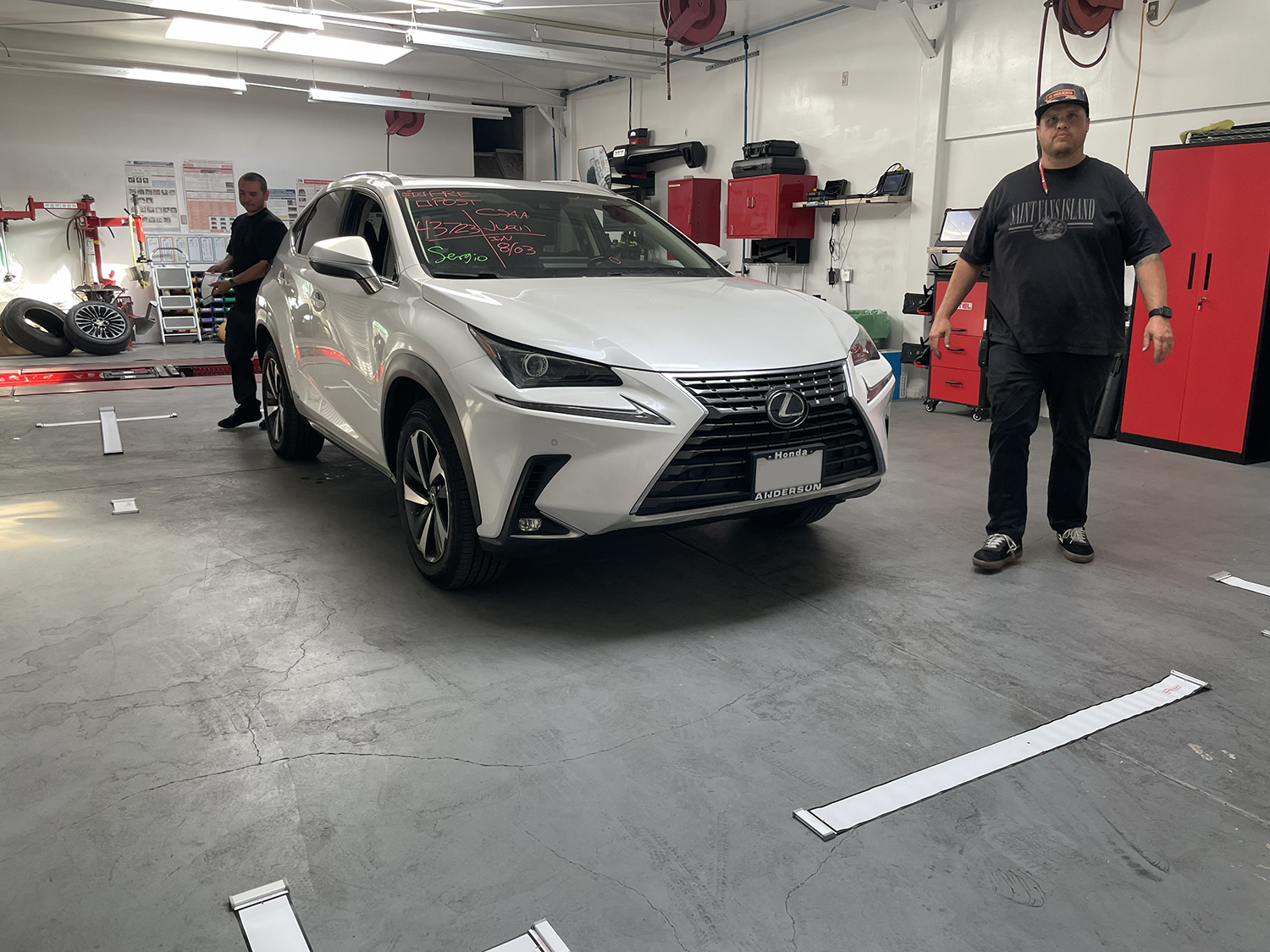
That’s why we partner with Monterey Coastal Scanning, a separate ADAS calibration business that rents space on our one-acre lot. This on-site partnership helps us coordinate required calibrations, expedite the repair process, and repair vehicles more efficiently.
What Is ADAS?
ADAS stands for Advanced Driver Assistance Systems. These technologies are designed to support driver awareness, help prevent certain accidents, and reduce the severity of some collisions.
Depending on your vehicle, ADAS may include:
- Blind spot monitoring
- Lane departure warning
- Lane keep assist
- Adaptive cruise control
- Automatic emergency braking
- Forward collision warning
- Rear cross-traffic alert
- Parking assistance
- 360-degree surround-view cameras
- Night vision systems
Many newer vehicles include several of these features. However, the equipment and capabilities vary by year, make, model, and trim level.
ADAS supports attentive driving; it does not replace it. Drivers still need to stay alert, understand their vehicle’s limitations, and remain responsible for steering, braking, and responding to road conditions.
How Does ADAS Work?
Depending on its equipment, your vehicle uses cameras, radar, ultrasonic sensors, and electronic control modules to gather and interpret information about its surroundings.
Different systems serve different purposes. Cameras may identify lane markings, while radar can help measure the distance to a vehicle ahead. Parking sensors may detect nearby obstacles.
These technologies help support tasks such as:
- Alerting you to vehicles in your blind spot
- Monitoring your distance from traffic ahead
- Warning you when you drift out of your lane
- Detecting certain pedestrians or cyclists
- Warning you about crossing traffic while reversing
- Helping you maneuver into a parking space
Their performance depends on proper installation, required calibration, and operating conditions. Weather, visibility, dirty sensors, and other factors can affect what a system detects.
Why Precision Matters
Your vehicle’s cameras and radar sensors need accurate positioning and reference points to interpret their surroundings correctly.
Think about aiming a flashlight at a distant object. A small change in its direction can move the beam substantially farther away.
That illustration helps explain why sensor alignment matters. A slight change in a camera’s or radar sensor’s position can affect the information it provides to the vehicle.
Manufacturers establish specific procedures for calibrating these components. Depending on the vehicle, those procedures may involve specialized targets, precise measurements, diagnostic equipment, prescribed driving conditions, or a combination of steps.
Calibration follows the requirements for the specific vehicle and system being serviced.
Where Are Your Vehicle’s Cameras and Sensors?
ADAS components are often integrated into areas drivers rarely notice.
A forward-facing camera may sit behind the windshield. Other cameras may be installed in mirrors, grilles, or rear liftgates. Radar sensors may be positioned behind a bumper or emblem.
On vehicles with surround-view technology, multiple cameras combine their images to create the overhead view you see while parking.
Because these components are connected to parts commonly repaired after an accident, their requirements deserve attention during the collision repair process.
Why ADAS Matters After a Collision
A collision can affect a sensor, camera, mounting bracket, or the structure supporting it. Sometimes the component itself appears undamaged, but its position has changed.
Repairs can also create a calibration requirement. Depending on the manufacturer’s instructions, calibration may be needed after:
- Replacing a windshield with a mounted camera
- Repairing or replacing a bumper or grille near a radar sensor
- Replacing a camera, sensor, or mounting bracket
- Replacing a mirror containing relevant cameras or sensors
- Performing structural repairs near sensor mounting locations
- Completing certain steering, suspension, or alignment procedures
Not every collision requires every system to be calibrated. The vehicle’s equipment, damage, repairs, and manufacturer procedures determine what is necessary.
That’s why identifying applicable calibration requirements is an important part of planning a complete repair.
Meet Monterey Coastal Scanning: Our On-Site Calibration Partner
Monterey Coastal Scanning is a separate business that rents space on CARSTAR Robert’s Collision’s one-acre lot in Monterey, California.
Our partnership brings collision repair and ADAS calibration together at one convenient location.
CARSTAR Robert’s Collision handles the body, structural, and cosmetic repairs. Monterey Coastal Scanning provides ADAS calibration using specialized technology and applicable manufacturer procedures to help restore calibrated systems to factory specifications.
For vehicles undergoing repairs at our shop, having a calibration partner on site simplifies communication and scheduling. It can also reduce transportation delays associated with taking a vehicle to a separate calibration facility.
The result is better coordination between the visible repairs and the technology working behind the scenes—supporting a smoother, more efficient repair experience.
Scanning and Calibration Serve Different Purposes
A diagnostic scan and an ADAS calibration are related, but they are different procedures.
A scan retrieves information from the vehicle’s electronic control modules, including diagnostic trouble codes. That information helps guide diagnosis and repair.
Calibration establishes the required alignment or reference points for applicable cameras and sensors.
Completing a scan does not automatically mean calibration has been completed. Each procedure must be considered according to the vehicle manufacturer’s repair requirements.
Modern Collision Repair Goes Beyond What You Can See
Repairing today’s vehicles involves more than replacing damaged panels and matching paint.
It also requires attention to the cameras, sensors, and electronic systems that support features drivers use every day.
At CARSTAR Robert’s Collision, we combine collision repair craftsmanship with the convenience of our on-site partnership with Monterey Coastal Scanning.
Together, we help coordinate the repairs and applicable calibrations your vehicle needs, with an emphasis on manufacturer procedures, clear communication, and careful workmanship.
Need Collision Repair in Monterey?
If your vehicle has been involved in an accident, our team is here to help you understand the repair process—including any applicable ADAS calibration requirements.
Contact CARSTAR Robert’s Collision to discuss your collision repairs and learn how our partnership with Monterey Coastal Scanning helps us repair vehicles more efficiently.
From the bodywork you can see to the safety technology you rely on, we’re committed to giving every part of the repair the attention it deserves.